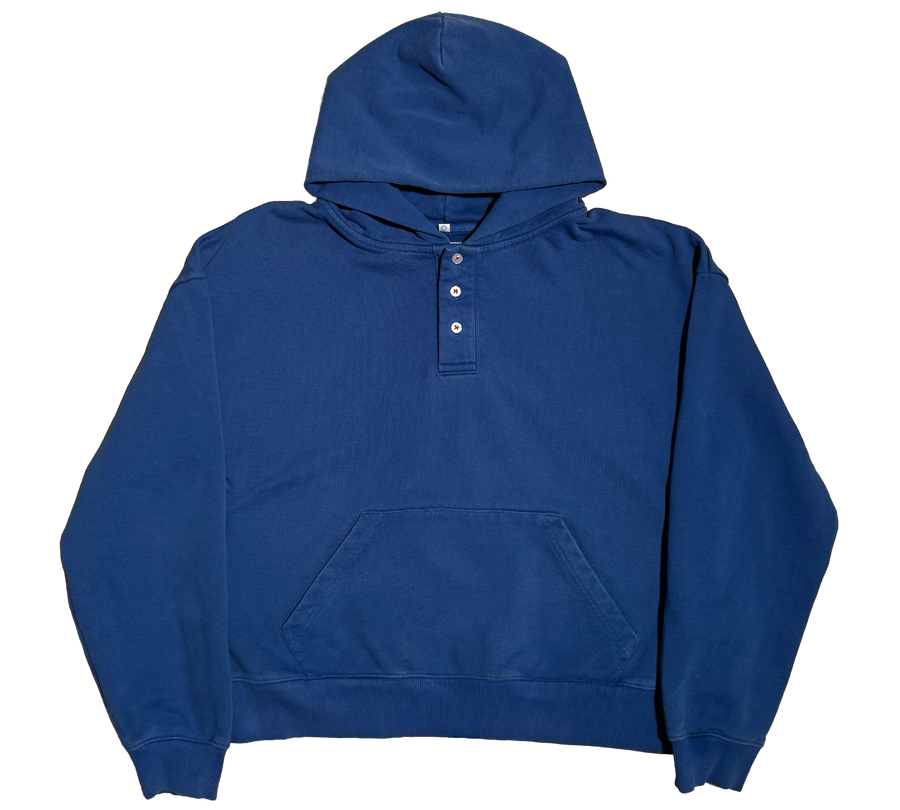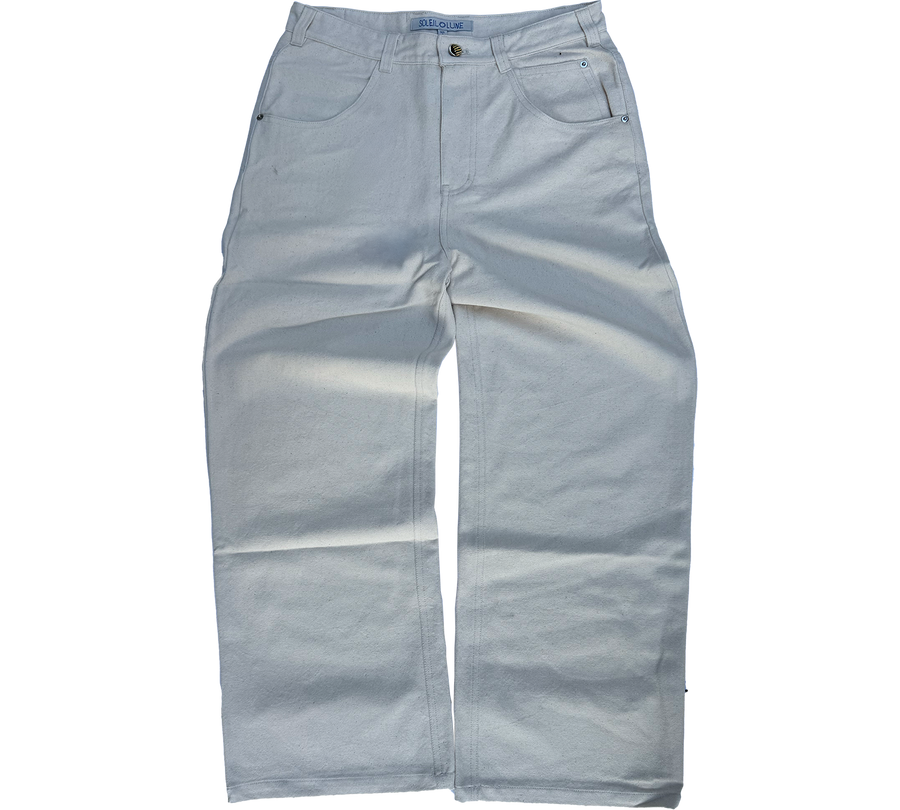
Raglan T-Shirt
$50.00Unisex
or 4 interest-free payments of $12.50 with Shop Pay
Pre-order — estimated to ship in 3–6 weeks.
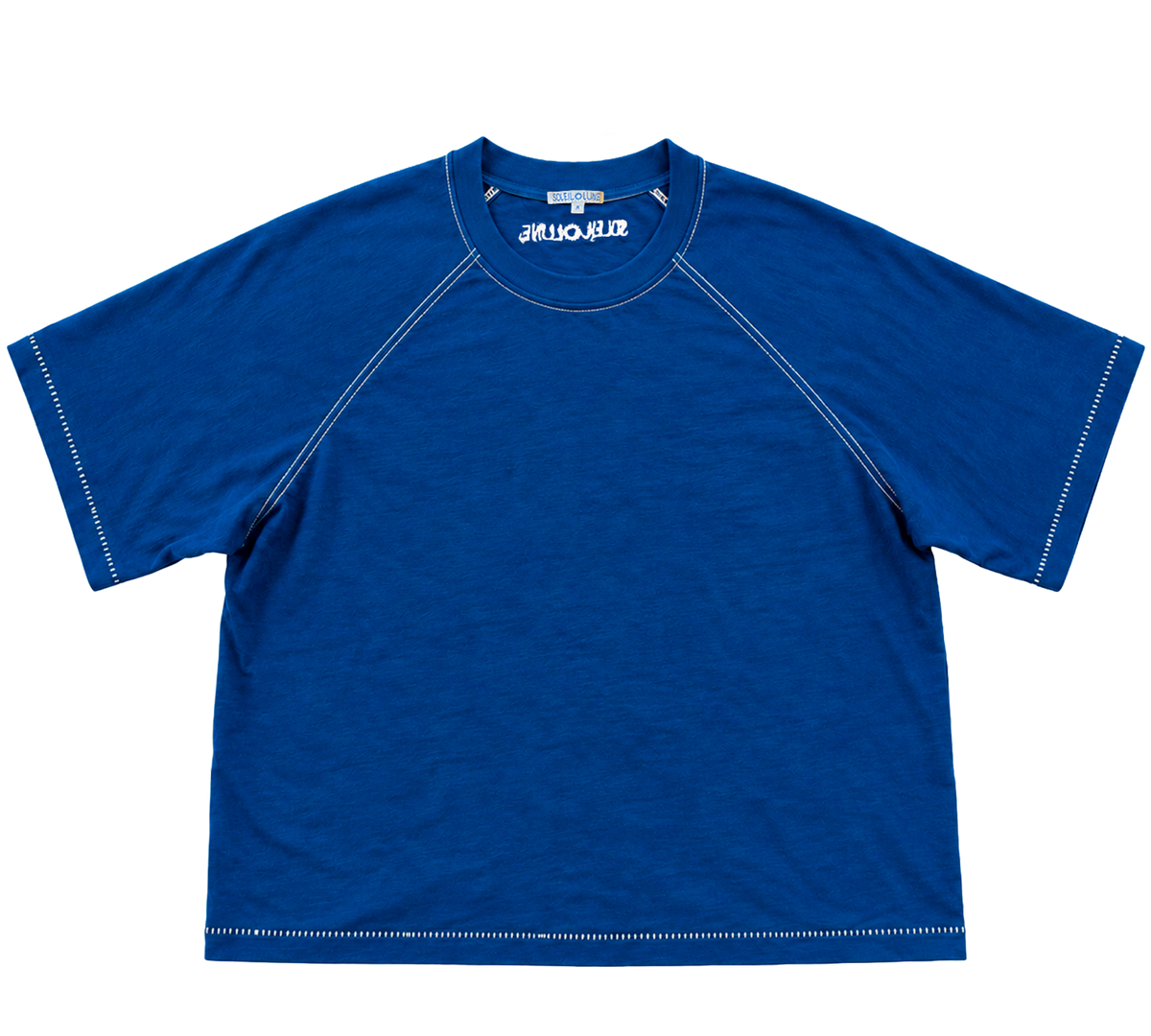
A lightweight raglan tee in 100% cotton slub jersey. The slub yarn gives the fabric a natural, uneven texture and a soft, slightly vintage feel, and it's preshrunk and washed so it fits right from the first wear.
Relaxed, boxy fit with raglan sleeves and a ribbed collar. Bold single-needle contrast stitching runs along the seams, sleeve hems and bottom hem, with the Soleil Lune logo embroidered just below the back collar in the same thread. Navy with red stitching, white with navy, blue with white.
Materials
Lightweight and breathable with a natural slub texture
Preshrunk and washed for a soft, lived-in feel
Embroidered logo, woven neck and size labels
Care
Environmental impact
We're sharing it so you know what this shirt actually costs the planet, not to make it sound greener than it is. No piece of clothing is good for the planet. The most sustainable shirt is the one you already own, so if you buy this one, we hope you wear it for years.
## At a glance
Carbon: about 5–8 kg CO2e, roughly the same as driving an average gas car 12–20 miles (US EPA: about 400 g CO2 per mile)
Water: about 2,000 liters, mostly to grow the cotton
Made of: about 0.2 kg of 100% cotton
Made in: China, through our production partner Glass Factory
Shipped to us: by air
## What it's made of
100% cotton slub jersey, about 180 GSM. GSM means grams per square meter, the weight of the fabric. 180 is light and breathable. A size medium uses roughly 0.2 kg of fabric, plus a little extra that's lost when the pattern pieces are cut. The woven neck label, size label and embroidered logo add very little.
## Carbon: about 5–8 kg CO2e
CO2e (carbon dioxide equivalent) rolls all greenhouse gases into one number.
Making the shirt: about 3–6 kg. This covers growing the cotton, spinning it into yarn, knitting, dyeing, washing and sewing. Recent research puts finished textiles at about 15–50 kg CO2e per kg, and a cotton t-shirt at about 2–7 kg (Zhang et al., 2026). We used the lower-middle of that range because this is plain cotton with simple trims. Most of it comes from electricity, and China's grid ran on about 60% coal in 2023 (Ember). A study of a knit and dye mill in China found knitting and dyeing alone came to about 7.5 kg CO2e per kg of fabric (Zhu et al., 2024).
Getting it to us: about 2 kg. These shirts fly about 11,700 km from China to California. Long-haul air freight is about 0.9 kg CO2e per tonne-kilometer (UK Government, 2025), many times more than shipping by sea. For a shirt this light, the flight is roughly a third of the total.
Getting it to you: shipping across the US adds a small amount on top.
## Water: about 2,000 liters
Cotton is a thirsty crop. It takes about 10,000 liters of water to produce 1 kg of cotton, counting farming, dyeing and washing (Water Footprint Network, via Scientific American). Researchers at the University of Twente estimated about 2,700 liters for a typical cotton shirt, and ours is a bit lighter. A lot of that is rain falling on cotton fields, not water pumped from rivers, but irrigation in dry regions can drain local water supplies. We don't know which farm grew this cotton.
## Dyes and chemicals
Dyeing and finishing is where most of a garment's water pollution happens, and it makes up about 30–50% of manufacturing emissions (Zhang et al., 2026). We don't have chemical or wastewater documents from the dye house, so we aren't making any claims about it.
## Microfibers
All fabric sheds tiny fibers in the wash. Because this shirt is 100% cotton with no polyester, those fibers aren't plastic. Research shows cotton fibers break down in water while polyester fibers stick around (Zambrano et al., 2019). The embroidery thread and labels may contain some synthetic fiber.
## Your part
How you wash it matters. Washing and drying can use about as much energy over a cotton shirt's life as making it did (Cotton Incorporated LCA). Wash cold, run full loads and hang it to dry. Keeping clothes in use for just three more months cuts their carbon, water and waste footprints by about 5–10% (WRAP). When you're done with it, pass it on or resell it. Every second, about a truckload of clothing is landfilled or burned (Ellen MacArthur Foundation).
## Where we can do better
Flying is the biggest single thing we could change. Shipping by sea takes longer but would make that part close to zero. We also don't have organic or recycled cotton yet, or certifications for the farm, mill or factory. What we do: we make small runs (360 shirts across three colors this run) and sell some by pre-order, so we don't make more than people want.
## Sources
Zhang et al. (2026), "Advances in carbon footprint on cotton and its textile products," Carbon Footprints. https://www.oaepublish.com/articles/cf.2025.121
Zhu et al. (2024), carbon footprint of reactive-dyed cotton knit fabric made in Jiangsu, China, International Journal of Life Cycle Assessment. https://link.springer.com/10.1007/s11367-024-02323-9
Ember (2024), Global Electricity Review: China and US grid data. https://ember-energy.org/latest-insights/global-electricity-review-2024/major-countries-and-regions
UK Government (2025), Greenhouse gas reporting: conversion factors (air freight). https://www.gov.uk/government/collections/government-conversion-factors-for-company-reporting
US EPA, Greenhouse gas emissions from a typical passenger vehicle. https://www.epa.gov/greenvehicles/greenhouse-gas-emissions-typical-passenger-vehicle
Scientific American, "How Big Is Your Water Footprint?" (Water Footprint Network). https://www.scientificamerican.com/article/how-big-is-your-water-footprint/
University of Twente (2008), water footprint of a cotton shirt, via ScienceDaily. https://www.sciencedaily.com/releases/2008/10/081016084053.htm
Cotton Incorporated (2016), Life Cycle Assessment of Cotton Fiber & Fabric. https://cottonworks.com/sustainability/cotton-life-cycle
Zambrano et al. (2019), "Microfibers generated from the laundering of cotton, rayon and polyester based fabrics and their aquatic biodegradation," Marine Pollution Bulletin 142. https://agris.fao.org/search/en/records/65df076b7c7033e84bec9f24
WRAP (2012), Valuing Our Clothes. https://wrap.ngo/resources/report/valuing-our-clothes-true-cost-how-we-design-use-and-dispose-clothing-uk-2012
Ellen MacArthur Foundation, Fashion and the circular economy. https://www.ellenmacarthurfoundation.org/fashion-and-the-circular-economy-deep-dive
Shipping & returns
PRE-ORDER: This tee is being made now and is estimated to ship in 3–6 weeks.
We'll email you tracking as soon as it ships. If your order also has in-stock items, everything ships together when the pre-order arrives.
Free US shipping on orders over $150. Otherwise shipping is calculated at checkout.
Free US shipping on orders over $150. Under $150, shipping is calculated at checkout. Returns within 14 days of delivery.
Full shipping & returns policy

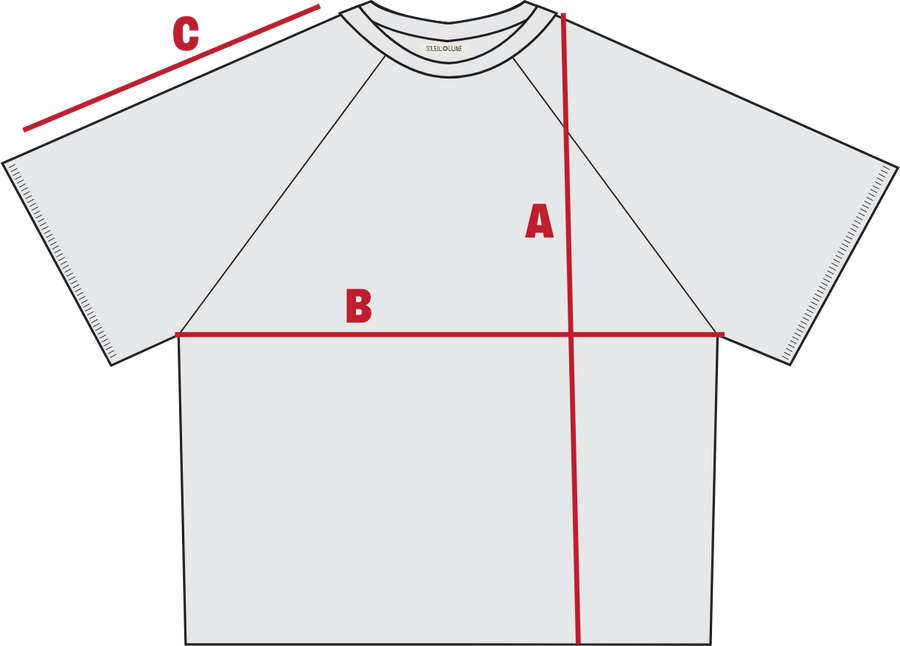
| MeasurementIN | XS | S | M | L | XL |
|---|---|---|---|---|---|
| ABody length | 23½ | 24¼ | 25 | 25¾ | 26½ |
| BChest width | 20 | 21 | 22 | 23 | 24 |
| CSleeve length | 13½ | 14 | 14½ | 15 | 15½ |
Measured flat, in inches. Relaxed, boxy fit. Take your usual size.